
Integrated Double-Girder Trolley Hoist
Heavy-duty, high-speed wire rope hoists—from compact low-headroom trolleys to double-girder units. Share capacity, lift height and duty class for quick sizing.
Integrated Double-Girder Trolley Hoist
This redesigned version uses the stronger structure of the first page, adds a left-side quick guide and lowers the visible reference pricing so buyers are more willing to leave project details for the exact factory quote.
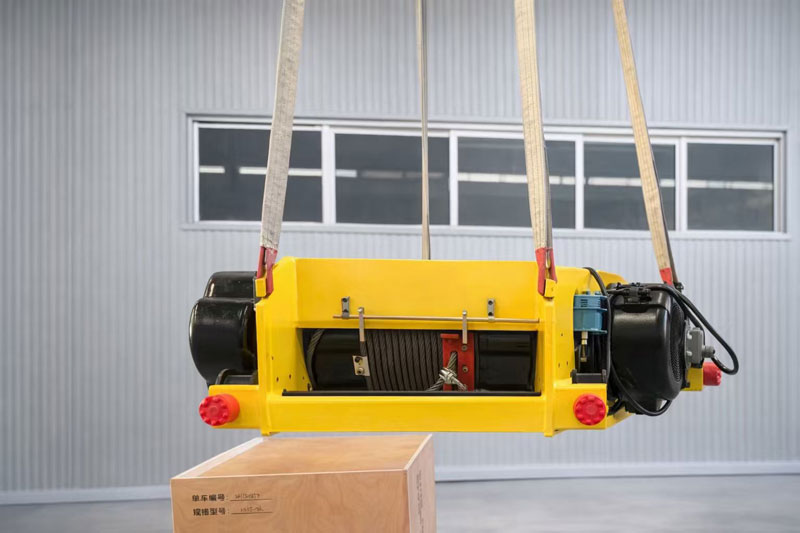
- Integrated trolley arrangement
- Double-girder crane matching
- Project-based export quote
- Inquiry-first conversion flow
What buyers usually confirm first
Integrated trolley projects are usually not judged by lifting capacity alone. Once the hoist and trolley are reviewed as one package, crane direction, rail size, wheelbase, lift height, duty class and control mode all affect the final configuration and quotation much earlier.
Integrated trolley packaging
The hoist and trolley direction are reviewed together, which helps create a more compact arrangement for double-girder crane applications.
Cleaner double-girder fit
This direction is practical when the buyer wants the trolley unit to match the crane layout more directly instead of combining separate parts later.
Better installation alignment
Integrated trolley projects often move faster when wheelbase, rail direction, power supply and control mode are confirmed from the start.
Faster quotation with crane inputs
Capacity, lift height, crane span, rail type, duty group and site voltage usually define the correct integrated trolley configuration much faster than a generic inquiry.
Project Direction for Integrated Double-Girder Trolley Applications
This section follows the stronger visual structure of the first page, while keeping the actual integrated trolley content from your second page so the buyer understands both product direction and quotation logic more clearly.
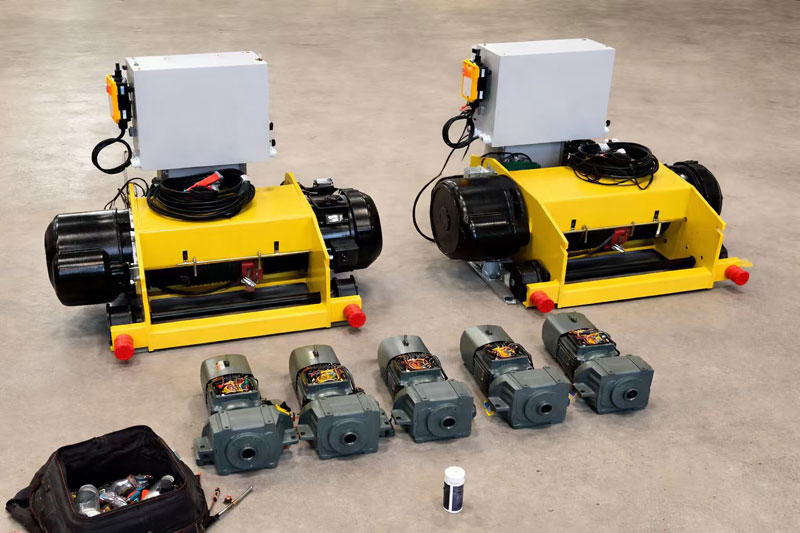
Integrated Trolley Configuration for Double-Girder Cranes
The main value of an integrated double-girder trolley hoist is not only compact appearance. It is also about matching the running trolley, lifting unit and crane-side installation direction as one more coordinated package for project delivery.
- Suitable for new double-girder crane projects where buyers prefer a cleaner trolley and hoist combination instead of a more separated arrangement.
- Often reviewed with rail direction, wheelbase, lifting height and duty class so the integrated unit matches the crane more directly.
- Helpful where the buyer needs stronger quotation guidance for crane-side installation, maintenance access and export electrical matching.
- Power supply, duty group and control mode should be confirmed early for clearer configuration matching.
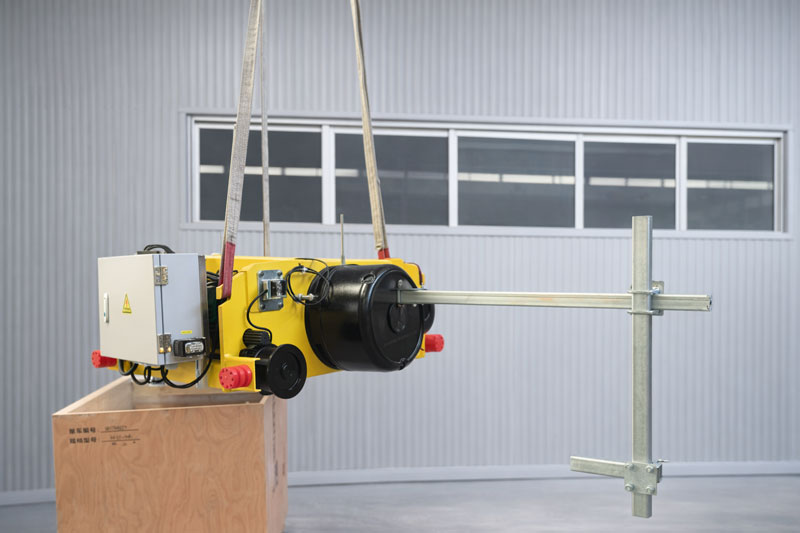
Compact Crane Layout Direction
Useful when the project wants a tidier double-girder running arrangement and a trolley package that looks more integrated from fabrication to installation.
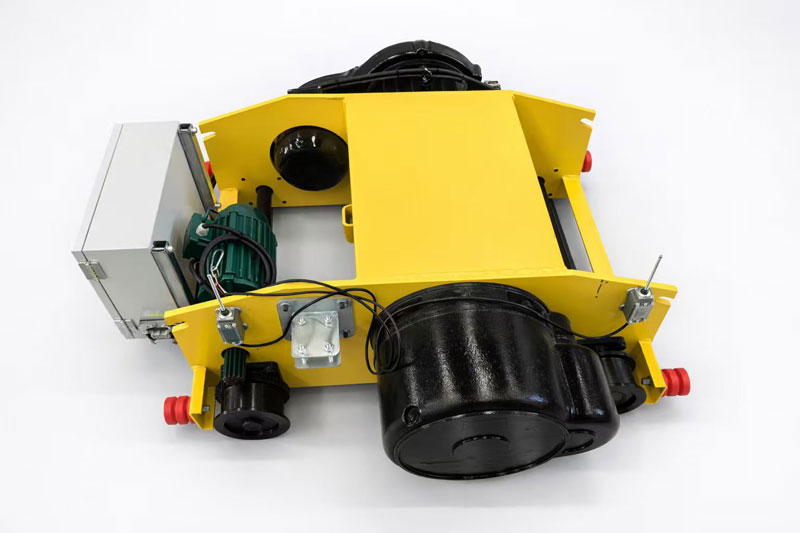
Replacement / Upgrade Direction
Practical for upgrade projects where the buyer wants a more integrated trolley solution for a double-girder crane instead of keeping an older separated running structure.
When an integrated trolley hoist is usually the better choice
The project direction becomes clearer when these conditions appear in the inquiry.
What helps move quotation faster
These details help narrow the configuration and keep the factory reply more accurate.
Build Your Integrated Trolley Spec
This section keeps the interactive flow from your first-page family. The right side summarizes the likely direction and maps the buyer to a lower-friction price reference before the real quote is finalized.
Tell us the main project direction
The more the crane-side details are defined here, the easier it becomes to match the integrated trolley structure and return the correct quotation.
Current quotation snapshot
This box now follows the same practical linkage logic as the stronger reference page: the buyer changes the left-side parameters, the budgetary range updates here, and the matching price card below highlights automatically.
Buyer-Friendly Reference Pricing
These numbers are intentionally shown as reference-only and positioned lower than aggressive top-end list pricing. The goal is to keep the buyer comfortable enough to ask for the exact ex-factory quotation with real project details.
Compact Standard Range
Suitable for lighter integrated trolley discussions, moderate duty expectations and clearer standard crane-side conditions.
- Commonly used for 3 t to 5 t integrated trolley discussions
- Good starting point for new crane inquiries with clearer basic inputs
- Best when the buyer still needs the exact rail size and duty confirmation
Balanced Export Quote Range
Useful for the most common integrated trolley projects where buyers want practical pricing without being pushed away by a visibly high number.
- Suitable for many 5 t to 10 t project conversations
- Fits new crane and replacement trolley discussions more naturally
- Encourages the buyer to leave rail size, lift height and voltage for the exact quote
Heavier Duty / Longer Review
For higher-capacity, higher-duty or more customized integrated trolley arrangements that need more detailed crane-side confirmation.
- More likely when capacity, duty level or control expectation moves upward
- Useful for more deliberate replacement or heavier industrial line projects
- Final price still depends on rail size, trolley direction and electrical details
What engineers usually review next
Once the buyer shows interest, these are usually the next technical checkpoints that help the conversation move from guide pricing to exact quotation.
What usually matters most
- Required capacity and target lift height
- Double-girder crane direction and rail size
- Wheelbase, installation dimensions and available maintenance access
- Required operating smoothness and preferred control mode
- Working frequency and expected duty level
- Power supply and installation country
What helps confirm pricing faster
- Whether this is a new crane or replacement trolley project
- Any drawing, site photo or crane layout reference
- Indoor, dusty, covered outdoor or exposed outdoor environment
- Expected delivery schedule and quantity
- Whether VFD-related lifting or travel direction is preferred
- Any existing older trolley dimensions that should be matched or improved
Product Views & Project Gallery
The gallery below keeps the page visually stronger and supports inquiry discussions without repeating the exact same image logic everywhere.

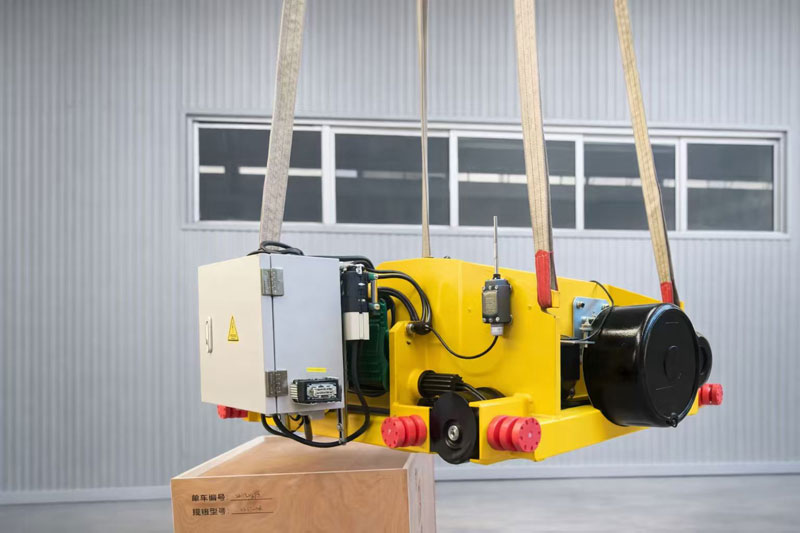
Configuration direction for integrated double-girder use
The integrated trolley direction is especially useful when the project wants a cleaner running arrangement, more coordinated installation and a clearer double-girder crane interface.
Send Your Integrated Trolley Hoist Inquiry
The visible price is there to attract the buyer, but the conversion goal is still to get real crane-side details and return the exact quote. This section keeps the full-width, easy-to-scan inquiry style from your stronger page version.
Recommended basic inputs
- Capacity
- Lift height
- Rail size or running direction
- Power supply
- Installation country
Useful project details
- New crane or replacement trolley
- Duty class or working frequency
- Control mode preference
- Any drawing or site photo
- Expected delivery schedule
Quotation reminder
Guide prices are reference only.
- Final exact quote depends on actual project details
- Voltage and installation country affect export configuration
- Rail and trolley direction often affect the final solution more than buyers expect