
CYCRANE / Bulk handling attachments
Crane Grabs & Grab Buckets.
Clamshell and orange-peel grabs for waste, coal, biomass, ore, scrap and grain. Mechanical rope or single-hook electro-hydraulic configurations, tailored to your crane and handling material.
- 0.5–20 m³Original listed volume range
- 3 DrivesDouble-rope / Four-rope / EH
- M6–M8Duty groups listed
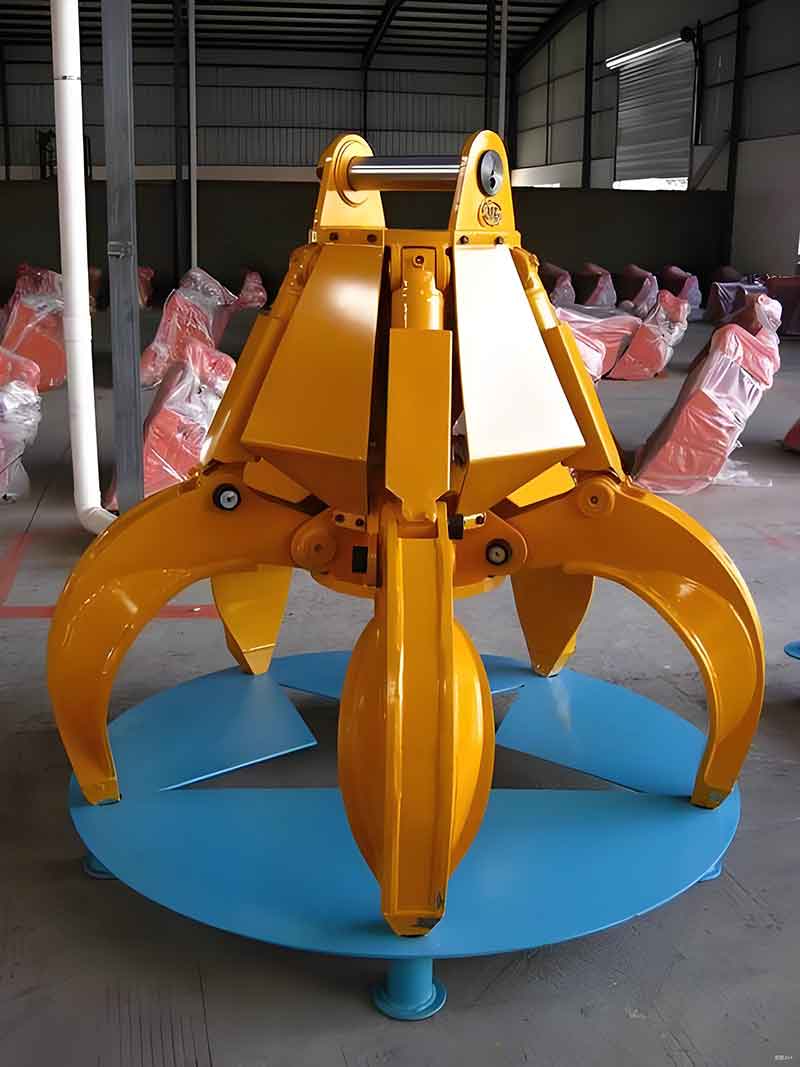 CLAMSHELL / ORANGE PEEL / ELECTRO-HYDRAULIC
One material-handling project. One clear technical specification.Provide grab volume, density, hook capacity, lifting arrangement and cycle targets.
- 01Pick grab type
- 02Check application
- 03Send RFQ
01 / Grab solutions
The right tool
for the material.
Different bulk densities, particle sizes, lifting motions and hook arrangements demand different grabbing systems.
01 / Bulk and granular materials
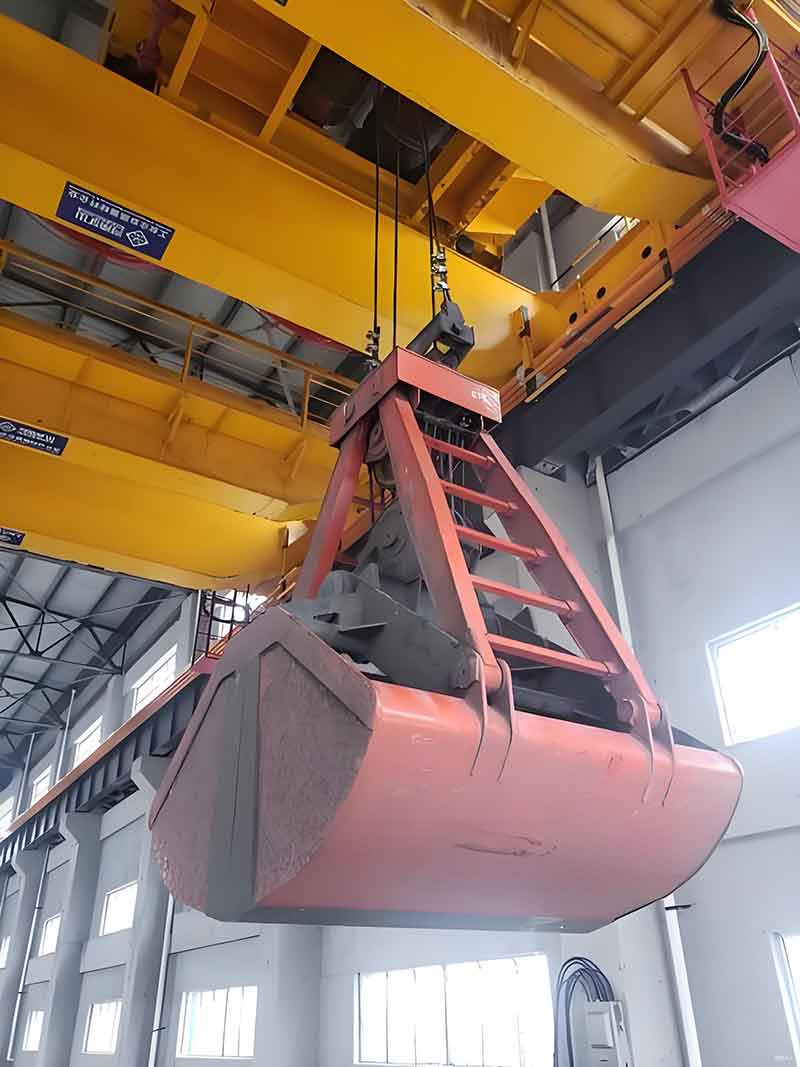
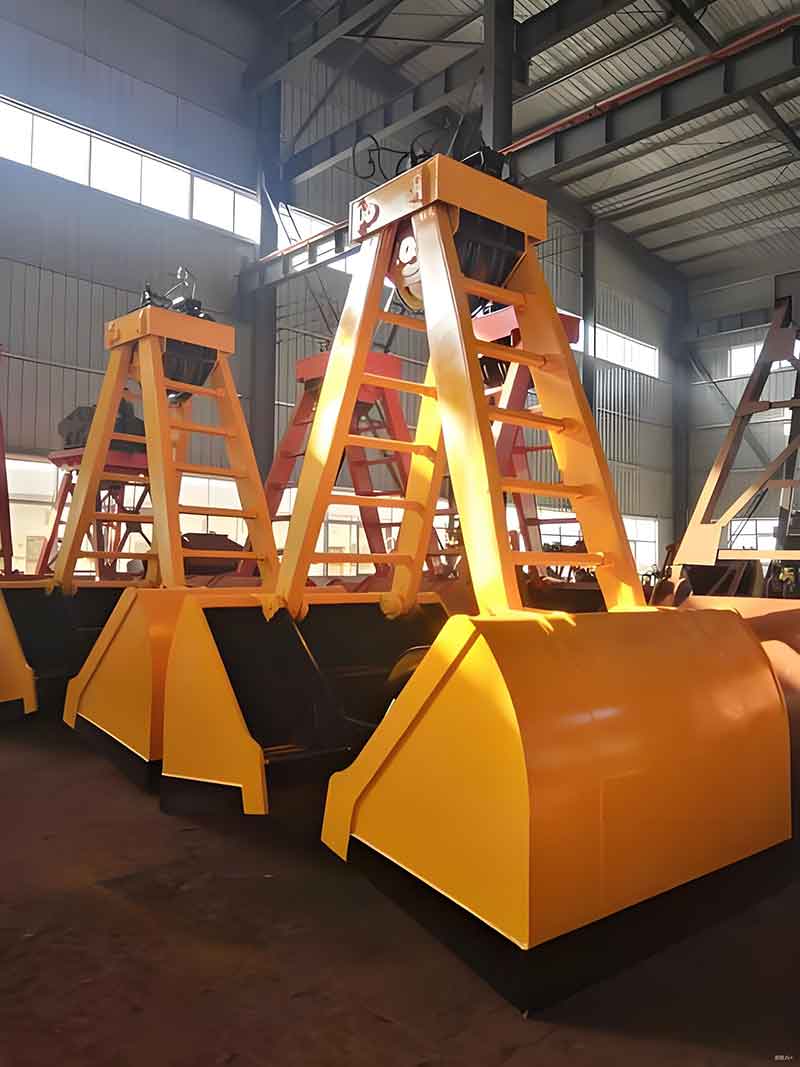
Clamshell Grabs
Standard, rectangular and digging versions for coal, grain, aggregate, waste and similar materials. Optional teeth and wear protection.
02 / Scrap and bulky cargo
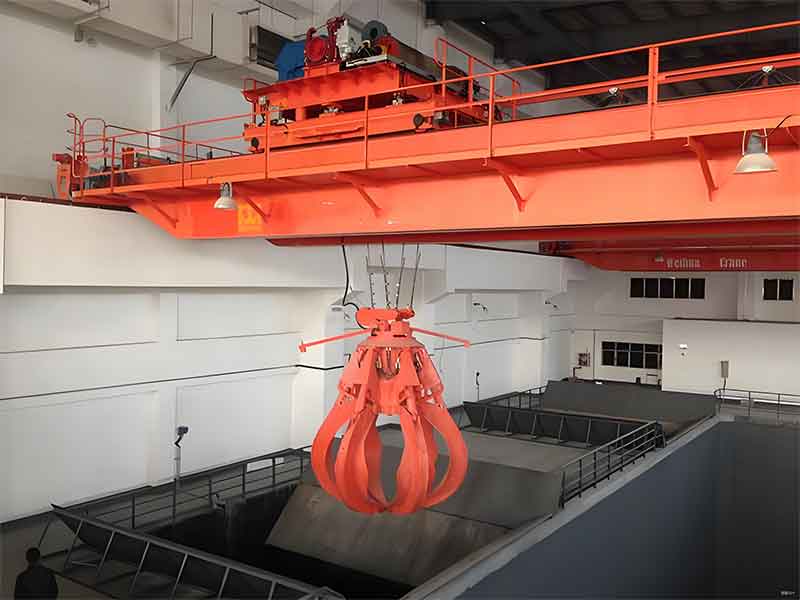
Orange-Peel Grabs
Multiple tines support handling of irregular scrap and bulky material. Select four, five or six tines for your enquiry.
03 / Different crane systems
Mechanical & Electro-Hydraulic
Double-rope and four-rope mechanical options, or an electro-hydraulic power pack where a compatible single-hook crane is used.
02 / Engineering review
Match the grab
to your crane.
The correct volume does not determine suitability by itself. Check the rated crane capacity, the grab’s actual self-weight, the filling conditions and operating method.
Density & filling
Use a realistic bulk density and filling ratio for your actual product, not only a nominal volume. Moisture and particle size can change both.
Hook & opening system
Confirm total suspended load, lifting height, available headroom and whether the crane supports a mechanical rope or electro-hydraulic grab.
Cycle & wear
Repeated handling calls for matched structural duty, wear plates, pins, hydraulic parts and maintainable access.
03 / Interactive project enquiry
Build your
grab specification.
Adjust the starting values and review a live payload and hook-capacity screening estimate. Then send the resulting English technical brief with your enquiry.
Project requirements
Choose the attachment type and crane interface, then define your handled material and duty.
01 / Grab construction
Start with the bucket format and drive arrangement.
02 / Material and crane
Material selection supplies example density and filling-factor assumptions; actual values must be verified.
03 / Construction and options
Only appropriate parameters appear in the final enquiry brief.
04 / Commercial information
04 / Budget only
Reference pricing
for early planning.
The original page contains an illustrative ex-works cost formula. This section preserves that concept and fixes the original double-discount calculation; figures are not confirmed sales prices and exclude any final engineering, freight, taxes or agreed certification scope.
Request firm price and lead time ↗Illustrative USD range / total selected quantity
- Type / drive
- —
- Volume & material
- —
- Duty
- —
- Options
- —
- Quantity
- —
- Timeline
- —
USD ex-works illustrative range; confirm by quotation, drawing and actual material specification.
05 / Production references
Industrial grab
types & details.
Source image references retained from the original CYCRANE page; appearance and supplied options vary by model and project.
06 / Engineering information
Technical
overview.
Use these ranges as an initial catalogue guide. Final parameters, availability and requested documentation must be confirmed against approved technical drawings and the order.
| Grab types | Clamshell (standard, rectangular or digging); orange-peel with 4, 5 or 6 tines. |
|---|---|
| Drive schemes | Double-rope or four-rope mechanical; electro-hydraulic unit for compatible single-hook lifting. |
| Volume | 0.5–20 m³ original listed range; special volumes subject to confirmation. |
| Handled materials | MSW, coal/biomass, ore/clinker, scrap, grain/fertilizer, sand/aggregates. |
| Duty groups | M6, M7 and M8 listed in the source page; final classification depends on application and applicable standard. |
| Wear protection | Optional wear plates, digging teeth, dust sealing and heat shielding, depending on model. |
| EH configuration | Hydraulic cylinders and integrated power pack specified after size, duty and circuit review. |
| Project deliverables | General arrangement drawings, manual, inspection and FAT records to be agreed in the quotation. |
07 / Supply workflow
From material data
to installed grab.
- 01 / ENQUIRY
Operating inputs
Material, volume, crane capacity, grab interface and site conditions.
- 02 / REVIEW
Technical proposal
Confirm self-weight, dimensions, fill ratio and mechanism.
- 03 / PRODUCTION
Build and assembly
Steel fabrication, machining, pins, bushings and drive installation.
- 04 / INSPECTION
FAT as agreed
Dimensional and functional checks; hydraulic leak tests if relevant.
- 05 / DELIVERY
Export shipment
Project documents, suitable packing and service support.
08 / Frequently asked questions
Before placing
a grab order.
Accurate material density, the crane’s actual usable capacity, interface drawings and target duty matter more than nominal bucket size alone.
What is the difference between clamshell and orange-peel?
Clamshell buckets are commonly used for bulk materials such as coal, aggregate or grain. Orange-peel grabs are commonly considered for irregular scrap and bulky materials. Final suitability depends on particle size and operating method.
Can an electro-hydraulic grab work with a single-hook crane?
That option is listed in the original product scope, but the electrical supply, cable management, hook interface, geometry and safe crane capacity require review.
Can I trust the payload and deadweight figures?
No. They are illustrative screening values based on assumed bulk density, fill factor and approximate construction weight, not a guaranteed payload or approved mass.
Will the estimator reject an oversized grab?
It highlights where the estimated suspended mass approaches or exceeds entered hook capacity, but it cannot independently validate the lifting equipment or determine a safe working capacity.
Is the reference budget a sales quote?
No. The prices are inherited from the original page’s sample calculation and should only be used to discuss requirements. Ask for a confirmed quotation with specifications and delivery terms.
09 / Request for quotation
Get pricing
& lead time.
Send us the project material, required volume, crane drawings and capacity, handling cycle and preferred drive system. The configuration below is included in the email summary when CF7 is configured.
Certificates, testing documentation, technical drawings, lead time and warranties are confirmed according to each order and supply scope.
Send a technical RFQ.
Your latest parameters automatically update this enquiry brief.
Preparing technical requirements...
Error: Contact form not found.
Before publishing, replace YOUR_ID with your actual Contact Form 7 ID. If WordPress shows shortcode text, use a separate Shortcode block. For email delivery, add [hidden builder_snapshot] to CF7 Form and [builder_snapshot] to CF7 Mail.