
CYCRANE / Holding, stopping & crane motion
Crane Brakes
& Brake Systems.
Match the braking task.
Define the complete brake package.
Review electromagnetic disc, thruster drum and hydraulic caliper brake arrangements for hoist, trolley and long-travel projects. Bring your operating data, brake location and installation interfaces into one technical enquiry.
- Disc / DrumBrake arrangements
- Hoist / TravelApplication review
- EXW budgetPlanning reference
- New build & replacement
- Mechanical interfaces
- Controls & protection
 CRANE BRAKES / DUTY & INTERFACE REVIEW
One replacement or a complete motion package.Bring the shaft, motor and gearbox details.
- 01Define the motion
- 02Share the duty
- 03Confirm the scope
01 / Brake arrangements
Define the motion.
Compare the brake arrangement.
Choose a starting brake type, then review the actual duty, control and mechanical interfaces. The proposed model and supply scope follow the project requirements.
MOTOR INTERFACE
Electromagnetic Disc Brakes
Review the motor/shaft interface, torque, control supply and release requirements for the selected AC or DC brake arrangement.
WHEEL & THRUSTER
Thruster Drum / Shoe Brakes
Define brake-wheel dimensions, mounting, thruster details and operating duty for the complete drum-brake package.
DISC & CLAMPING
Hydraulic Caliper Brakes
Share disc dimensions, actuation, mounting and braking-duty data for an external-disc caliper arrangement.
02 / Selection guide
Holding and stopping.
One coordinated system.
Identify the function and brake location before comparing torque figures. Bring the motor, gearbox, operating cycle and installation data into the review.
Motion & function
Hoist holding, trolley cross-travel or crane long-travel: specify the task and the shaft where the brake acts.
Torque & interfaces
Record load/mass, speed, drum/wheel diameter, reeving, gear ratio, shaft and mounting dimensions.
Stopping & heat
Share stop frequency, target stopping behavior, actual inertia and operating cycle for the selected brake.
Control & options
Include supply/control voltage, release behavior, microswitches, protection and requested accessories.
03 / Configure & plan
Build the brake enquiry.
Review the assumptions.
Configure your operating data and requested package. The model provides a torque/energy illustration and an EXW budget for discussion; the selected brake rating and duty still need project review.
Your Brake Configuration
Use actual operating and interface data where available. Default values are a discussion example, not a selected brake model.
01 / Application & brake type
Identify the motion and the preferred brake arrangement.
02 / Mechanical parameters
Verify whether the brake is on the motor/gearbox input shaft.
03 / Stopping duty
Stopping time is a target input; this simplified estimator does not verify achievable stopping performance.
04 / Options & purchasing
Choose desired accessories, requested protection, quantity and target timing. Availability and delivery are confirmed in the quotation.
04 / Technical scope
Function, interfaces and duty.
A defined brake package.
Review these brake families and option areas against the actual model offered. The table describes a project scope; it does not confirm every option on every brake.
| Brake families | Electromagnetic disc (DC/AC), electro-hydraulic thruster drum (shoe), hydraulic caliper |
|---|---|
| Applications | Hoist holding/stopping, trolley cross-travel (CT) and crane long-travel (LT) |
| Typical torque range | 10–5,000 N·m reference; confirm the actual brake model and rated torque. |
| Enclosure protection | IP54 / IP65 selections; heaters and dust covers as options |
| Friction & service | Asbestos-free linings, wear indicators where available |
| Accessories / control | Manual release, position microswitches, DC rectifier or thruster power unit as applicable |
| Engineering documents | Outline drawings, agreed inspection and test reports according to the final supply scope |
The 10–5,000 N·m reference and selectable IP ratings are confirmed per model. The planning calculator does not select a catalogue size or verify stopping/thermal capability.
05 / Product details
See the arrangement.
Define the interface.
Use the reference images to start a discussion. Nameplate photos and dimensions help identify the exact replacement or new brake package.
Thruster drum-brake product reference
Reference photograph. Final model, mounting and supplied accessories follow the project proposal.
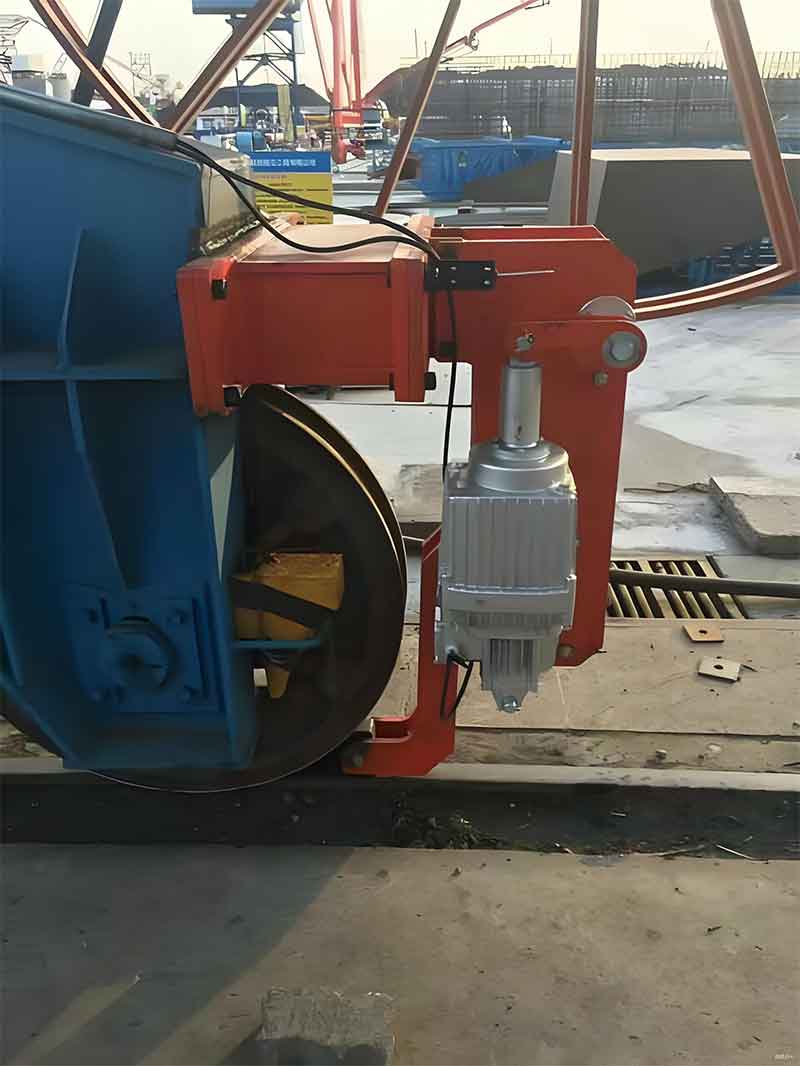
Installed brake / drive reference
Reference photograph. Final model, mounting and supplied accessories follow the project proposal.
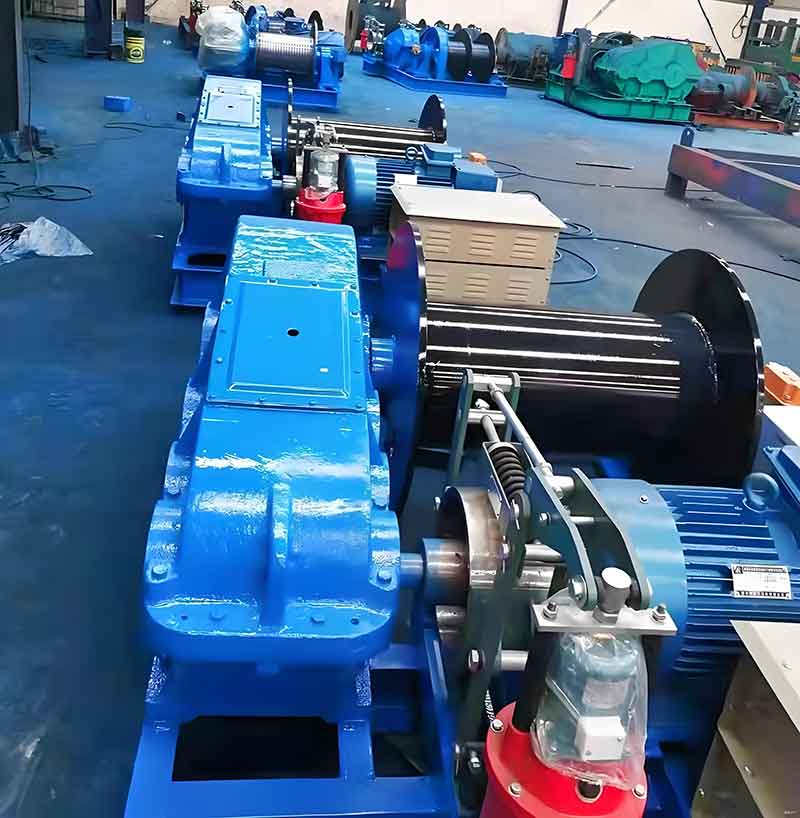
Hoist-drive and brake arrangement
Reference photograph. Final model, mounting and supplied accessories follow the project proposal.
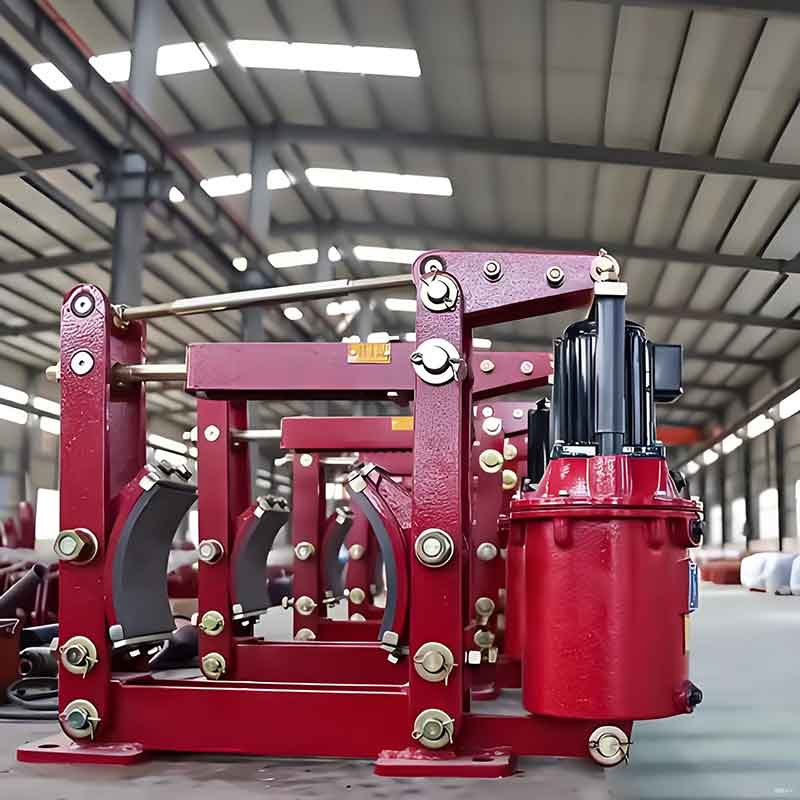
Thruster brake workshop reference
Reference photograph. Final model, mounting and supplied accessories follow the project proposal.
06 / Project steps
From operating data
to an agreed brake package.
Define the task, review the model and confirm the inspection and supply scope before delivery.
Define duty
Application, load, motion speed, brake location and target function.
Validate model
Torque, thermal requirements, interface and control review.
Confirm scope
Model, accessories, documentation, price and lead time.
Inspect
Agreed torque, release and visual checks before dispatch.
Deliver
Goods, packing and agreed documents for installation.
07 / Before you specify
Planning a brake
replacement or new build?
The actual function, drive data and interfaces guide the selected brake model.
Discuss My Brake Requirements ↗Can you review a brake from its existing nameplate?
Send the brake/motor/gearbox nameplates, mounting dimensions and clear photographs. They support a model and interface review; the replacement scope is confirmed in the proposal.
Does the calculator select a safe brake size?
No. It preserves a simplified torque and translational-energy model for early discussion. It omits rotating inertia, hoist lowering potential energy, release/closing behavior and model-specific braking-work limits. It is not a safety assessment or a verified brake rating.
Why does hoist torque stay the same when I change stop time?
The hoist branch models load torque using load, reeving, diameter, ratio, efficiency and the chosen factor. Stop time is a request input; this branch does not calculate dynamic stopping torque. Speed still affects the separate translational-energy proxy.
Can I request manual release and microswitches?
Yes. Record manual release, microswitch, dust cover or heater requests in the builder. Confirm availability and compatibility for the actual brake model.
Is the displayed range per piece or for the quantity?
It is the modelled EXW equipment total for the entered quantity, including its quantity-discount and urgency assumptions. It is an indicative budget, and the final scope and commercial price need a written quotation.
Are the timeline options confirmed delivery dates?
No. They record the requested target. Availability and delivery are confirmed separately after the model, quantities and supply scope are reviewed.
08 / Technical & commercial enquiry
Send the brake requirements.
Bring the drive and mounting data.
Your selected parameters, planning outputs and budget are included with the enquiry. Add the existing model, supply voltage, mounting data and supporting files where available.
- WhatsApp / phone+86 155 1554 5327
- Sales enquiriessales@cy-cranes.com
- Talk about your projectCall +86 155 1554 5327
Useful details: brake/motor/gearbox nameplates, actual brake location, shaft speed and inertia, holding/stopping duty, wheel/disc dimensions, control voltage, release behavior, quantity and destination.
Crane Brake Technical RFQ
Start with your email and destination. Add the project details you already know.
Review the configuration included with your enquiry
Prefer email? Send your configuration ↗