
Wire Rope Hoists
Heavy-duty, high-speed wire rope hoists—from compact low-headroom trolleys to double-girder units. Share capacity, lift height and duty class for quick sizing.
CYCRANE / Bridge-crane trolley lifting
Double-Girder
Trolley Hoist.
Match the trolley.
Coordinate the crane and lifting task.
Configure a double-girder hoist package around the lifting load, rail layout, wheel loads and duty. Review standard, VFD / process-duty and twin-hoist directions for your bridge crane.
- 10–200 tProduct reference
- M5–M7Duty reference
- Single / twinHoist layouts
- 4 / 8 / 12 wheel options
- VFD hoist & travel review
- Spare parts support
 DOUBLE-GIRDER HOISTS / CRAB TROLLEY ARRANGEMENT
Start with the crane layout.Then confirm the lifting and operating requirements.
- 01Load & lift
- 02Rails & wheels
- 03Layout & controls
01 / Configuration directions
One trolley family.
Three ways to start the review.
Choose a starting direction, then adjust the configuration. Layout, wheels and controls can be combined for project review; these choices are not final engineering approval.
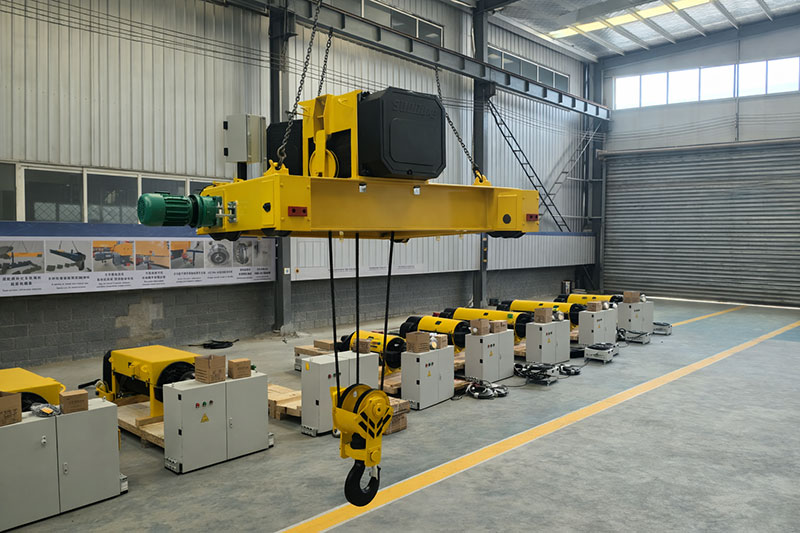
STANDARD DIRECTION
Double-Girder Trolley Hoist
A standard starting configuration for a defined double-girder crane layout. Review the trolley package, rail arrangement and lifting task together.
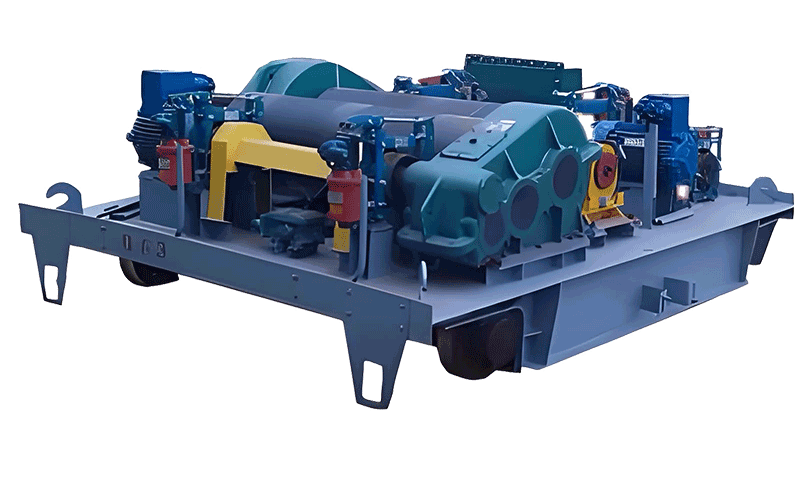
CONTROL & DUTY
VFD / Higher-Duty Direction
Review controlled movement, positioning and frequent operation. VFD, M6 / M7 duty and process controls are confirmed against the actual working cycle.
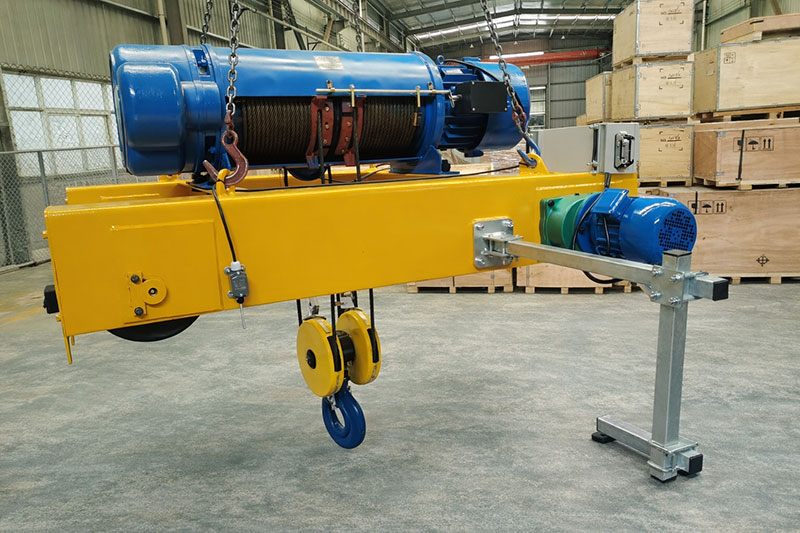
PROJECT LAYOUT
Twin-Hoist / Heavy Layout Direction
Discuss the main and auxiliary lifting requirements, wheel arrangement, hook spacing and crane structure. Twin-hoist ratings and control scope require separate confirmation.
02 / Configure & plan the budget
Define the lifting duty.
Review the trolley package.
Adjust the 11 original configuration choices. The equipment budget, complete specification and enquiry update together. The original calculator covers 10–100 t and 6–40 m lift.
Build Your Trolley Specification
Quantity means complete trolley packages. For twin hoists, state main/auxiliary ratings and simultaneous operating requirements in the enquiry.
The product reference extends to 200 t and 60 m lift, subject to project design. Requirements outside the calculator need a separate quotation.
03 / Technical parameters
Crane structure and trolley.
One coordinated specification.
The original nine parameter rows are retained. Product reference ranges extend beyond the standard calculator and require project confirmation.
| Type | Double-girder electric wire rope hoist / crab trolley running between girders |
|---|---|
| Capacity Range | 10–200 t typical, discussed according to crane structure, trolley package and working requirement. |
| Lift Height | 6–60 m reference range depending on application scene, drum arrangement and site layout. |
| Hoisting Speed | 2–16 m/min reference, standard or VFD direction depending on positioning and process needs. |
| Trolley Running Type | Double-girder trolley / crab arrangement for bridge-crane structures with clearer rail and beam definition. |
| Wheel Arrangement | 4-wheel, 8-wheel or further project-specific direction depending on capacity, span and wheel-load requirement. |
| Duty Group | FEM / ISO M5–M7 reference range for more frequent operation and heavier-duty project positioning. |
| Power Supply | 380V / 50Hz / 3Ph standard, export voltage and frequency options available for project discussion. |
| Optional Direction | Twin hoist, load display, remote control, anti-sway and other structure-led options can be reviewed. |
Higher capacities and special requirements can be discussed. CE / ISO documentation, FAT reporting and the original one-year warranty are confirmed within the agreed contract and supply scope.
04 / Product & workshop gallery
Review the trolley structure.
Plan the installation details.
Original product photographs from this page. Confirm the final rail, wheel and crane interfaces against the selected configuration and project drawing.
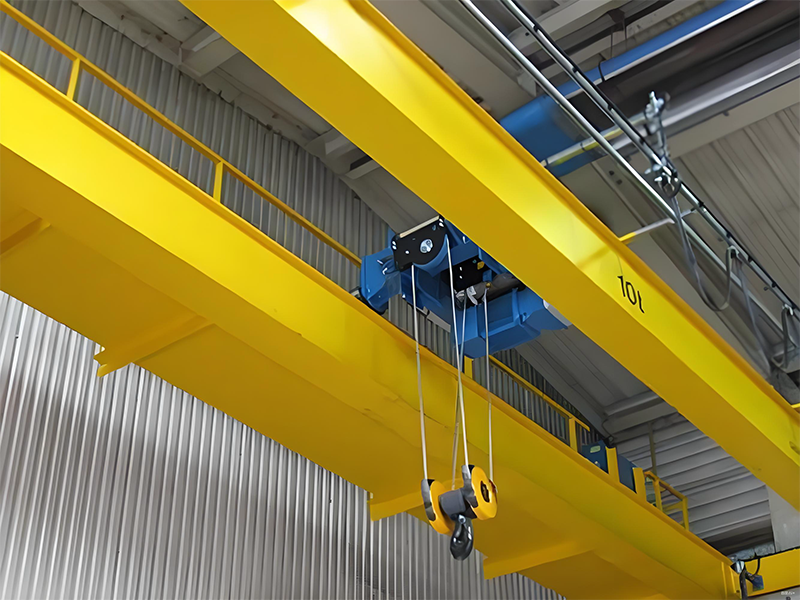
Featured trolley view
Original product photograph. Final wheel arrangement, dimensions and interfaces are confirmed for your crane.
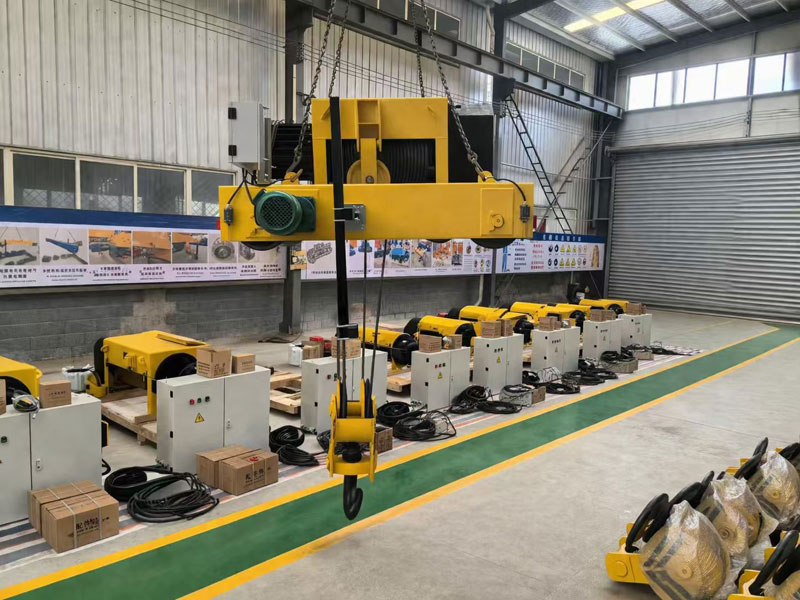
Workshop product display
Original product photograph. Final wheel arrangement, dimensions and interfaces are confirmed for your crane.
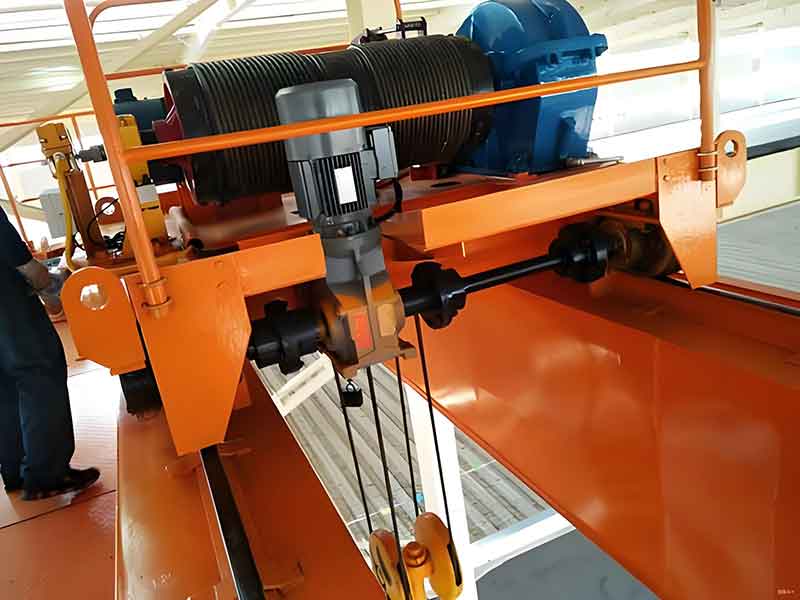
Trolley structure view
Original product photograph. Final wheel arrangement, dimensions and interfaces are confirmed for your crane.
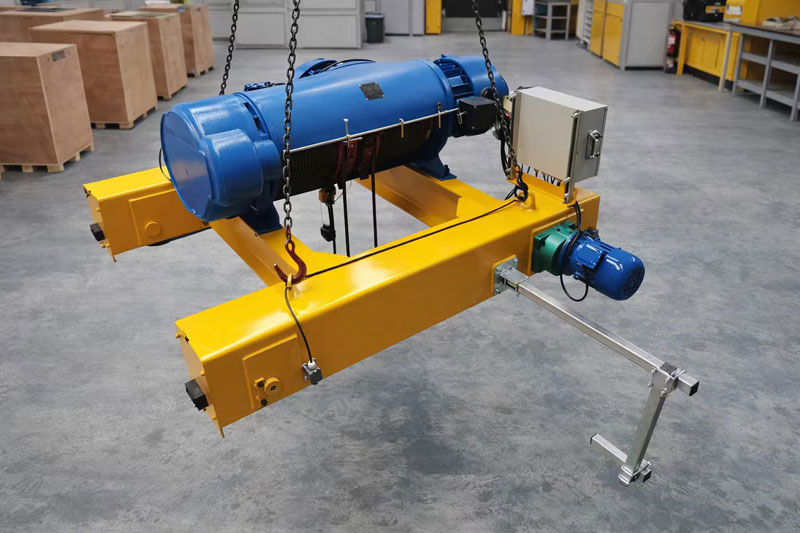
Standard trolley arrangement
Original product photograph. Final wheel arrangement, dimensions and interfaces are confirmed for your crane.
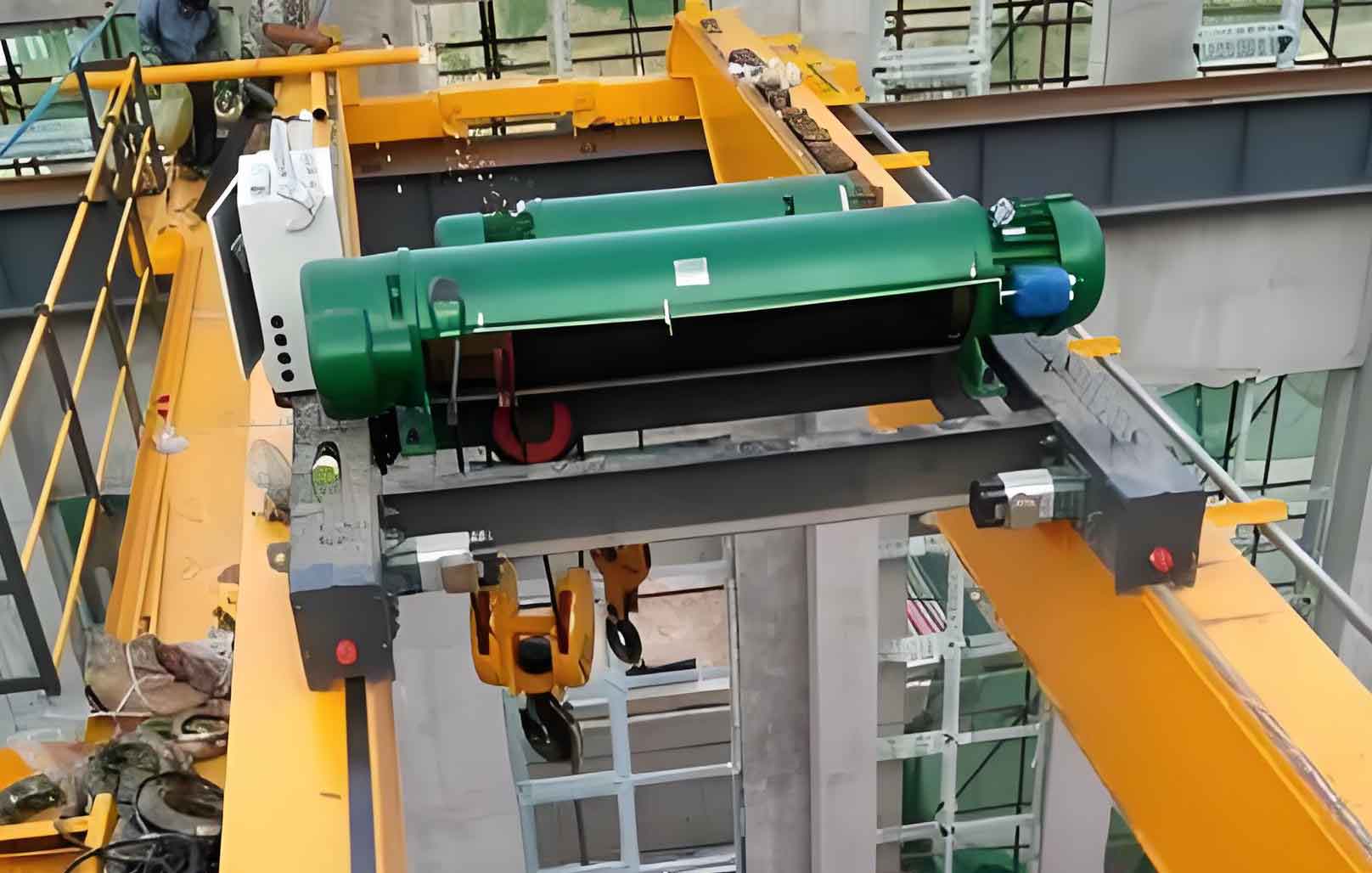
Crab trolley view
Original product photograph. Final wheel arrangement, dimensions and interfaces are confirmed for your crane.
05 / Bridge-crane applications
Match the lifting process.
Review the complete crane.
Discuss workshop bays, production handling and process lifting with the crane structure, trolley route and operating duty together.

WHAT TO REVIEW
Structure, motion and control.
- Bridge-crane rail geometry and trolley running path.
- Lifting loads, hook heights and loading positions.
- Frequent operation, process cycles and positioning needs.
- Main/auxiliary hooks, interfaces and operating interlocks.
06 / Before you specify
Questions for a clearer
trolley hoist quotation.
Start with the lifting task and crane layout. The project team can review the remaining choices with you.
Discuss your trolley package ↗What is included in the double-girder trolley hoist direction?
It is a hoist and trolley arrangement for running on a defined double-girder crane structure. Rail geometry, wheel loads, available space, hook approach and lifting duty determine the final package.
When should I consider VFD or process-duty controls?
Describe the required movement, positioning, starts per hour and process cycle. The VFD and process-duty choices are starting points for technical review, together with the applicable working duty.
How is a twin-hoist requirement specified?
State the main and auxiliary hook ratings, lift heights, hook spacing and whether independent, load-sharing or tandem operation is required. The calculator capacity is a planning input, not confirmation of either hook rating. Quantity counts complete trolley sets.
Does the calculator cover the full product range?
No. It retains the original 10–100 t and 6–40 m inputs. The technical reference extends to 200 t and 60 m lift, subject to design. Requirements beyond the calculator need a separate quotation.
Why does changing voltage not change the reference budget?
The original formula has no separate voltage factor. Power supply is included in the enquiry. Final export electrical scope, control requirements and project details may affect the confirmed quotation.
Is the displayed budget a firm quotation?
No. The main range is the indicative equipment budget for the selected number of complete trolley sets. Multiple sets also show an equivalent per-set range. Final layout, main/auxiliary ratings, wheels, rails, controls, supply scope, commercial terms and schedule require confirmation.
07 / Your double-girder hoist enquiry
Tell us the lifting task.
Show us the crane layout.
Your selected configuration and reference budget are included with the enquiry. Add rail dimensions, main/auxiliary hook requirements and any scope outside the standard calculator.
- WhatsApp / phone+86 155 1554 5327
- Sales enquiriessales@cy-cranes.com
- Talk about your projectCall +86 155 1554 5327
Useful files: crane drawing, trolley rail gauge and profile, wheelbase, wheel loads, hook approach and site photos. For a replacement, include the old nameplate and installation dimensions.
Request a Double-Girder Trolley Hoist Quote
Start with your email and destination. Add the project details you already know.
Review the configuration included with your enquiry
Prefer email? Send your configuration ↗